Find Us in Massachusetts

Myopia Management for Children & Teens
Is your child's nearsightedness getting worse each year? You don't have to wait and hope it levels off. We treat progressive myopia as a medical priority, not just a stronger glasses prescription.
Care is available at all four of our offices: Natick, Dedham, Medford and Mansfield.
What myopia is
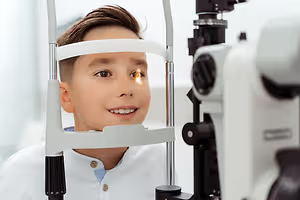
Myopia, or nearsightedness, means distant objects look blurry.
In children, it often means the eye is growing too long.
Glasses and everyday contact lenses make vision clear. But on their own, they don't slow that growth.
Glasses fix vision. They don’t slow eye growth.
Why it matters — and why start early
As the eye grows longer, the lifetime risk of serious eye conditions can rise. These include:
- Retinal problems
- Myopic maculopathy
- Glaucoma
Managing progression during childhood is one of the most meaningful investments you can make in your child's eye health.
The years when the eye grows fastest are often the years treatment helps most. Waiting isn't always a neutral choice while the eye is still growing.
We measure, explain, and treat — calmly, without scare tactics, and with a plan you can understand.
Is your child a candidate?
Every child is different. Only an exam can confirm the right next step. Parents often book a myopia evaluation when:
- Nearsightedness is getting stronger year after year
- Their child got a first pair of glasses at a young age (especially before the tween years)
- One or both parents are highly nearsighted
- Their child squints at the board, sits close to screens, or says distance vision is fuzzy even with a recent prescription
- A doctor or school screening noted “progressing myopia” or suggested follow-up sooner than next year
- Their child isn't nearsighted yet, but has less “far-sighted reserve” than expected for their age (what clinicians call premyopia), and family risk is high
If any of this sounds familiar, it's worth a conversation.
Our treatment options
We evaluate your child, prescribe the right myopia-management plan, train families when contacts are part of care, and monitor progress over time. When contact lenses are part of the plan, we provide them through our office.
We match the plan to your child's age, prescription, lifestyle, and what your family can stick with.
Results vary. No treatment guarantees that myopia will stop progressing. Every option below is designed to help slow it.
Stellest® glasses
worn during the day
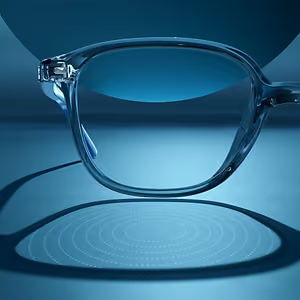
- Look like regular glasses. They correct nearsightedness and are designed to help slow myopia progression.
- Worn during the day, like everyday glasses. They aren't overnight lenses.
- Wear matters: best results need consistent daytime wear — at least 10 hours a day, at least 6 days a week (label guidance).
- FDA status: FDA market-authorized (Sept 25, 2025) to correct myopia and slow its progression in children ages 6–12 at the start of treatment, within a labeled prescription range.
- Often the first step for a newly nearsighted child who isn't ready for contacts.
MiSight® 1 day contact lenses
daily disposable soft lenses
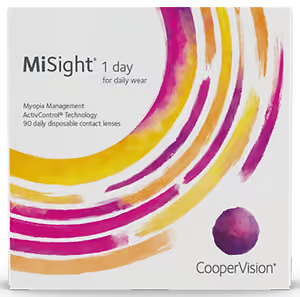
- Soft, daily disposable contacts that correct nearsightedness and are proven to help slow myopia progression in age-appropriate children.
- A fresh lens each morning, thrown away each night. No overnight wear. No cleaning case for daily use.
- FDA status: FDA-approved to correct myopia and slow its progression in children ages 8–12 at the start of treatment, within a labeled prescription range.
- Clear vision for school and sports. Every new wearer gets a dedicated training visit to learn insertion and removal with our team.
Ortho-k (orthokeratology) contact lenses
worn overnight while sleeping
- Worn overnight while your child sleeps. The lenses gently reshape the front surface of the eye, so daytime vision is clearer — often with little or no need for daytime glasses or contacts.
- FDA status: FDA-cleared for the temporary reduction of myopia. Using ortho-k specifically to slow myopia progression is generally considered off-label, even though clinical studies support its use in myopia management. Your doctor will explain what that means for your child.
Low-dose atropine eye drops
used at bedtime
- A prescription eye drop used to help slow myopia progression in selected children.
- Typically one drop at bedtime, as prescribed.
- FDA status: There is no FDA-approved low-dose atropine product for myopia control in the United States. Low-dose drops are compounded and prescribed off-label. (Standard commercial atropine strengths used for other eye conditions are a different product.)
- Sometimes used for children at high risk before they need full-time correction. Sometimes added to Stellest or MiSight if myopia keeps progressing despite optical treatment.
How it works at Lickteig Family Eyecare
Step 1: Myopia evaluation
Your child's doctor reviews eye health, the prescription, and family history. We explain the options in plain language and include your child in the conversation whenever we can.
Step 2: A personalized plan
Your doctor recommends a plan that fits your child's age, prescription, and daily life. We review fees and what insurance may or may not cover before you start. New contact lens wearers get a real training visit — nobody is rushed out the door half-ready.
Step 3: Follow-ups that track eye growth
Clear vision at today's visit is not the whole story. We track how the eye is growing over months and years. Follow-up visits typically include:
- Prescription (refraction) checks
- Corneal and eye health assessment
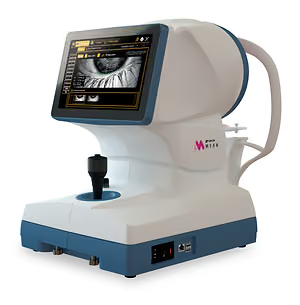
- We measure axial length with Topcon MYAH biometry at all four of our offices, so your child's progress is tracked with numbers you can see — not just a stronger or weaker prescription.
How often:
- Stellest or MiSight alone: about every 6 months (the annual comprehensive exam usually counts as the 12-month visit)
- Atropine, alone or combined: often at 3 months, then 6 months, then every 6 months
We book the next follow-up before you leave, so the plan doesn't fall through the cracks.
Meet the doctors
All of our doctors at Lickteig Family Eyecare practice myopia management. Care is provided by experienced, independent optometrists who know the evidence, the options and your family's day-to-day reality.
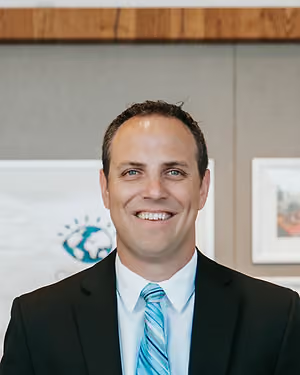
Dr. Lickteig — Owner and Chief Optometrist, Change Agent with The Myopia Collective

For pediatricians & referring doctors
LFE welcomes referrals from pediatricians and primary care doctors for children with nearsightedness or signs of progressing myopia.
After the evaluation, we share our findings and the treatment plan with the referring doctor. We keep you updated on your patient's progress at follow-up visits.
To refer a patient, have the family book a myopia evaluation or use the Call button to reach our team.
Frequently asked questions
What does it cost, and does insurance cover it?
Cost depends on the treatment (glasses, contacts, drops, or a combination) and on follow-up visits. It's often similar to how families pay for orthodontics.
Insurance often covers the annual comprehensive eye exam through vision or medical plans. Much of myopia treatment and specialized monitoring is not fully covered. Specialized follow-ups and axial length measurements are often patient-pay. Some families with both a health plan and a vision plan may see partial coverage of the office-visit portion.
We check your benefits and review fees with you before you start, so there are no surprises.
What age can my child start?
It depends on the child and the treatment.
- Stellest: FDA market-authorized for children 6–12 at the start of treatment (within labeled ranges). Your doctor may discuss off-label use outside that range when clinically appropriate, with your informed consent.
- MiSight 1 day: FDA-approved for children 8–12 at the start of treatment (within labeled ranges). Continuing past that age, or starting outside it, is a clinical decision made and documented with your family.
- Low-dose atropine: Age is individualized. It is used off-label as a compounded drop when your doctor recommends it.
- We see children for eye exams from age 4. Timing for myopia care is based on risk and exam findings, not an age cutoff.
How often are follow-up visits?
Most children using Stellest or MiSight return about every six months, with the annual comprehensive exam as the yearly deep dive. If atropine is part of the plan, we often see your child at three months first, then every six months. Your doctor sets the exact schedule.
Are Stellest lenses worn overnight?
No. Stellest lenses are glasses worn during the day. Ortho-k lenses, if prescribed, are the overnight option.
Is MiSight safe for kids?
MiSight 1 day is FDA-approved for myopia control in age-appropriate children. It uses a daily disposable schedule — a fresh, sterile lens each day. Daily disposable wear in children has a strong safety profile in published studies. Every new wearer at LFE completes structured handling training. Your doctor will review risks, benefits, and whether your child is a good candidate.
Can we wait and watch for another year?
Sometimes monitoring is appropriate. But for progressing childhood myopia, waiting isn't always harmless. The years when the eye grows fastest are often the years treatment helps most. If you want close tracking, we can often monitor how well treatment is working, rather than watching untreated progression. Ask us to walk through your child's numbers.
Where can we be seen?
Myopia management is offered at all four Lickteig Family Eyecare offices: Natick, Dedham, Medford and Mansfield, Massachusetts.
Take the first step toward long-term vision protection
If you're considering myopia management for your child, we're ready when you are. Our optometrists will review your child's eye health, explain the options in plain language, and build a personalized plan — at our offices in Natick, Dedham, Medford and Mansfield.